


Visionary Leadership: Seeing Possibilities Others Miss
Discover how visionary leadership helps leaders recognize possibilities, communicate a compelling vision, and inspire others to move confidently toward meaningful change.
Ikigai Dimension: What Are You Good At?
Some leaders possess a remarkable capacity for visionary leadership, seeing possibilities that others don't yet recognize. They notice patterns before they become obvious. They connect ideas that seem unrelated. They identify opportunities before others recognize they exist. They can walk into a complex situation and quickly understand what needs to happen next.
To the people around them, it can look effortless. Almost instinctive. Yet for many visionary leaders, this gift comes with an unexpected challenge. The issue isn't finding the answer. The issue is helping others understand how they arrived there.
When Strengths Become Leadership Assets
One of the four dimensions of Ikigai asks:
What are you good at?
At first glance, it seems like a simple question. Most people can identify skills they've developed over time but when I work with leaders, this question often goes much deeper.
Some leaders have a natural ability to build relationships. Some excel at creating structure and execution while others thrive in uncertainty.
Some visionary leaders possess a unique ability to see possibilities, patterns, opportunities, and solutions before they become obvious to everyone else.
These strengths often become a leader's greatest contribution.
When leaders understand and leverage what they naturally do well, they tend to lead with greater confidence, clarity, and impact. They stop trying to lead like someone else and begin leaning into the strengths that make them effective.
This is where Level 6 energy offers an interesting perspective.
The Energy of Creative Insight
Level 6 energy is often associated with intuitive leadership, creativity, innovation, and possibility. Leaders operating from this energy frequently describe moments when ideas seem to arrive fully formed.
They see connections others haven't yet made. They recognize patterns across seemingly unrelated situations. They identify opportunities before they become obvious. Sometimes they can see the solution before the problem has even been fully defined.
Organizations need visionary leaders who can think this way. Innovation rarely happens by repeating what has already been done. Growth often begins because someone sees a possibility others have overlooked. Some of the most successful leaders I've worked with possess this ability.
They can see around corners. They anticipate challenges. They identify opportunities early. They recognize trends before they become visible to everyone else. But leadership isn't simply about seeing the future.
It's about helping others move toward it.
When Visionary Leadership Outpaces Leadership Communication
One of the most common challenges visionary leaders face is assuming others can see what they see. Effective leadership communication requires more than sharing the destination. It requires helping others understand how you arrived there.
A leader may move from Point A to Point Z while their team is still trying to understand Point B. The leader becomes frustrated. The team becomes confused.
The leader thinks:
"Why doesn't everyone understand this?"
The team thinks:
"How did we get here?"
Neither side is wrong. They're simply operating from different perspectives. The leader sees the destination. The team still needs the map.
One of the most important lessons for visionary leaders is recognizing that what feels obvious to them may be completely new to everyone else.
What This Might Look Like at Work
You may be operating from strong Level 6 energy if you:
Frequently see opportunities others overlook.
Generate ideas quickly and easily.
Recognize patterns across seemingly unrelated situations.
Enjoy solving complex problems.
Thrive during periods of change and uncertainty.
Become frustrated when others don't immediately understand your vision.
Lose interest in repetitive processes and administrative details.
Prefer innovation over maintaining the status quo.
These strengths can create tremendous value. They can also create frustration if others struggle to keep pace.
What I See in Coaching
Some of the most visionary leaders I work with don't struggle with finding answers. They struggle with bringing others along.
They can see the opportunity. They understand the strategy. They recognize the future potential. Yet they become frustrated when others don't immediately embrace the vision.
What often surprises them is that resistance isn't always resistance. Sometimes it's simply a lack of understanding. People support what they understand. They commit to what they can see.
When team members ask questions, push back, or seem hesitant, it doesn't necessarily mean they disagree. It may simply mean they haven't yet connected the dots.
One of the most important aspects of leadership communication for visionary leaders is learning how to communicate not only the destination, but also the path that leads there.
I've found that some of the most influential leaders are not necessarily the ones with the best ideas. They're the ones who can help others understand and believe in those ideas.
The Blind Spots of Intuition
Like every leadership strength, intuitive leadership has limits. A leader who relies too heavily on intuition can unintentionally overlook the value of process, structure, and execution.
Ideas become more exciting than implementation. Possibilities become more attractive than practicality. Questions begin to feel like obstacles. Details begin to feel unnecessary.
Yet those details are often what help turn vision into reality.
In some organizations, teams begin feeling disconnected from the leader's vision because they are constantly trying to catch up. The leader is already thinking about the next opportunity while everyone else is still trying to execute the current one.
The goal isn't to diminish intuitive leadership. The goal is to pair intuition with effective leadership communication, clarity, and execution.
Vision creates direction. Execution creates results. Leadership requires both.
When Strengths Serve Purpose
One of the most powerful lessons within Ikigai is that our strengths exist for a reason. They are not simply personal advantages. They are opportunities to contribute.
A leader's ability to see possibilities can help an organization navigate uncertainty. Their creativity can fuel innovation. Their strategic insight can unlock growth. Their vision can inspire people to pursue opportunities they may never have considered on their own.
The challenge is ensuring those strengths create connection rather than distance. The most effective visionary leaders are not those who simply see possibilities. They are the ones who help others see them too.
Looking Ahead
Throughout this series, we've explored purpose, service, compassion, accountability, and vision.
The final article examines another powerful dimension of leadership: Passion.
What happens when leaders become deeply connected to what they love?
How can passion inspire others while still creating space for different motivations, perspectives, and priorities?
We'll explore those questions in the final article as we examine Level 7 energy and the role of purpose, joy, and meaning in leadership.
Leadership Reflection
Think about a vision, opportunity, or idea that feels obvious to you but not to the people around you.
Have you spent as much time explaining the journey as you have imagining the destination?
Sometimes leadership isn't about seeing further.
It's about helping others see what you see.
Frequently Asked Questions About Visionary Leadership
What Is Visionary Leadership?
Visionary leadership is the ability to recognize future possibilities, inspire others around a shared direction, and guide people toward meaningful change. Visionary leaders often identify opportunities before they become obvious, but their effectiveness depends not only on seeing the future—they must also help others understand and believe in that vision.
What Are the Characteristics of Visionary Leaders?
Visionary leaders are often recognized for their ability to see possibilities, anticipate future challenges, connect ideas, and think creatively. They inspire others through a compelling vision while remaining focused on long-term growth. The most effective visionary leaders also communicate their thinking clearly, helping others understand not only where they're going, but why.
What Is an Example of Visionary Leadership?
A leader who recognizes an emerging opportunity before competitors and successfully helps their team embrace a new direction demonstrates visionary leadership. Rather than simply presenting a new idea, they explain the reasoning behind it, address concerns, and guide others through the change so the entire team can move forward together.
Why Is Leadership Communication Important for Visionary Leaders?
Leadership communication helps visionary leaders translate ideas into action. While visionary leaders often see possibilities quickly, others may need more context before they can understand or support the vision. Clear communication builds trust, creates alignment, and helps teams confidently move toward a shared goal.
How Does Visionary Leadership Differ from Intuitive Leadership?
Intuitive leadership focuses on recognizing patterns, possibilities, and insights that may not yet be obvious to others. Visionary leadership builds on that intuition by creating a clear direction and inspiring others to pursue it. In many cases, intuition helps leaders discover the opportunity, while visionary leadership helps them communicate and achieve it.
Can Visionary Leadership Be Developed?
Yes. While some leaders naturally think more strategically or intuitively, visionary leadership can be strengthened through experience, self-awareness, curiosity, and intentional practice. As leaders learn to recognize patterns, communicate their ideas more effectively, and bring others along, they become better equipped to lead with vision and purpose.
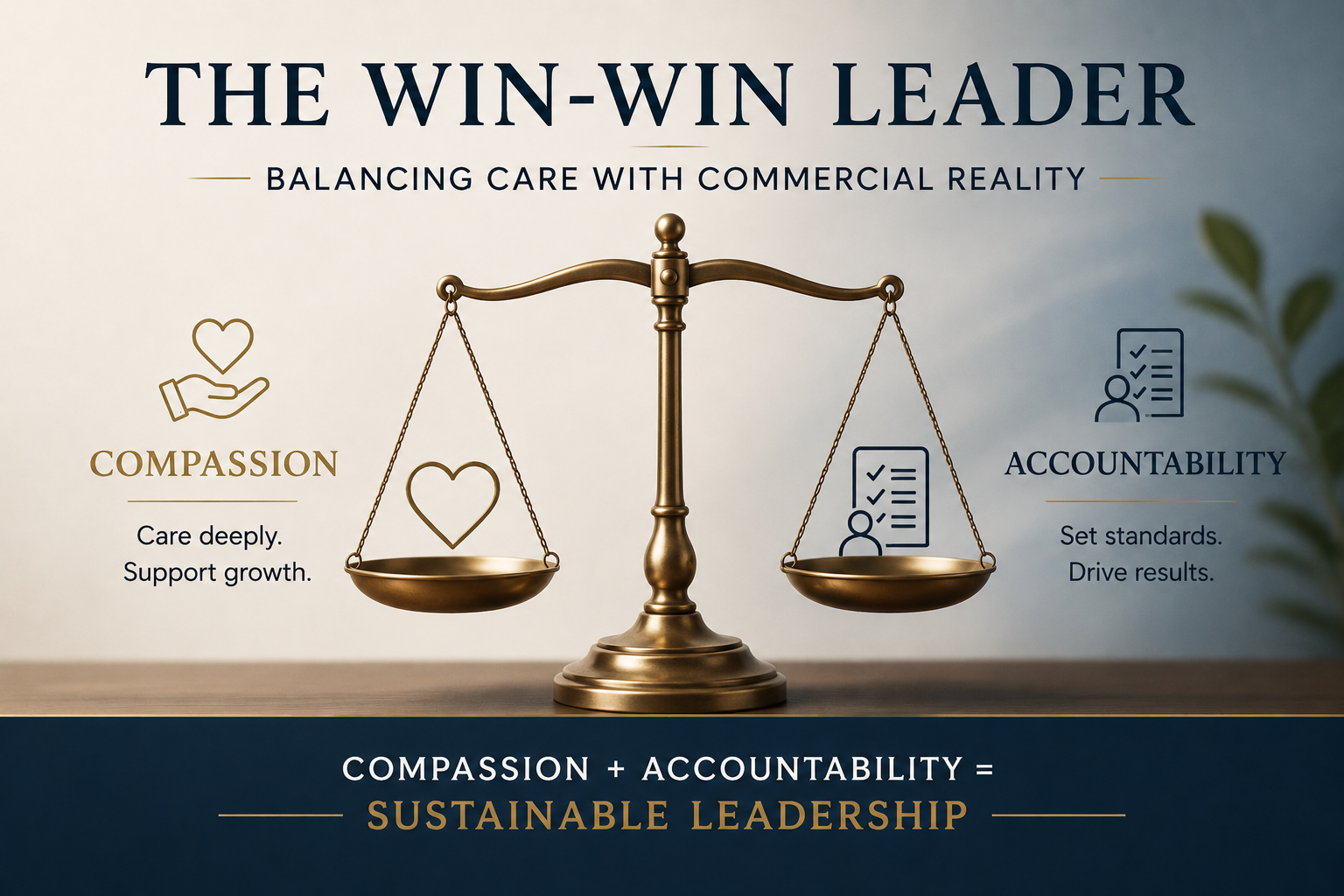
Accountability in Leadership: The Win-Win Leader
Can leaders make difficult decisions without losing their compassion? Discover how Level 5 energy and Ikigai Leadership help leaders balance care with accountability, navigate conflict with confidence, and create sustainable success for both people and organizations.
Ikigai Dimension: What Can You Be Rewarded For?
One of the most important leadership lessons I see leaders learn is this:
Caring about people and making difficult decisions are not opposing leadership qualities. In fact, accountability in leadership often requires leaders to balance compassion with difficult decisions that serve both people and the organization.
A leader may need to deliver difficult feedback. A manager may need to address ongoing performance concerns. A business owner may need to restructure part of the organization to ensure its long-term health. An executive may need to make an unpopular decision that protects the future of the company.
These moments can create significant internal conflict, especially for leaders who genuinely care about their people.
Many find themselves asking:
"Can I still be a caring leader if someone is disappointed by my decision?"
The answer is yes. In many cases, sustainable leadership requires it.
Accountability in Leadership: When Compassion Meets Reality
In the previous article, we explored how service, compassion, and contribution can become powerful leadership strengths.
We also explored the risks that emerge when leaders begin carrying responsibilities that were never theirs to carry.
Compassion matters. Relationships matter. People matter. At its core, accountability in leadership means making decisions that serve both people and the organization over the long term. Compassion without accountability can create unintended consequences.
Difficult conversations get postponed, performance issues go unaddressed, boundaries become unclear and necessary decisions get delayed.
Leaders become trapped between what feels kind in the moment and what serves people and the organization over the long term.
This is where Level 5 energy introduces an important shift in perspective.
Rather than viewing situations through a lens of winners and losers, Level 5 encourages leaders to look for outcomes that serve the broader picture.
Effective leadership accountability doesn't require abandoning compassion. It requires expanding it.
The Ikigai Question Many Leaders Avoid
One of the four dimensions of Ikigai asks:
What can you be rewarded for?
For some leaders, this question feels uncomfortable. Many leaders are drawn to leadership because they want to contribute, support others, and make a positive difference.
Conversations about profitability, productivity, revenue, and business performance can sometimes feel disconnected from those values.
Yet purpose without sustainability rarely lasts. An organization that cannot create value eventually loses its ability to serve employees, customers, communities, and stakeholders.
A business that ignores financial realities eventually loses its ability to fulfill its mission. This is why this dimension of Ikigai is so important. Being rewarded is not simply about personal gain.
It is about creating value in a way that allows meaningful work to continue. It is about building something sustainable enough to support both people and purpose.
Difficult Conversations at Work: From Avoiding Conflict to Creating Growth
One of the most powerful shifts leaders make is moving from avoiding discomfort to creating growth.
Level 5 energy helps leaders see challenges differently.
Difficult conversations at work become opportunities for development when leaders approach them with compassion and accountability.
Constructive feedback becomes an opportunity for growth.
Conflict becomes an opportunity for greater trust, clarity, and alignment.
Instead of asking:
"How do I avoid making someone uncomfortable?"
Level 5 leaders begin asking:
"What outcome creates the greatest opportunity for long-term success?"
That shift changes everything. Rather than protecting people from every challenge, leaders help people grow through challenges.
Rather than avoiding tension, they learn how to navigate it productively. Rather than focusing only on immediate emotions, they consider long-term impact.
Even difficult conversations at work can strengthen trust when leaders focus on long-term growth rather than short-term comfort. The decision may still be uncomfortable. But they understand that discomfort and harm are not the same thing.
What This Might Look Like at Work
You may be operating from healthy Level 5 leadership when you find yourself:
Addressing difficult conversations directly and respectfully.
Giving feedback that promotes growth rather than avoiding discomfort.
Making decisions that consider both people and business needs.
Looking for solutions that benefit multiple stakeholders.
Viewing setbacks as opportunities for learning and improvement.
Remaining calm during disagreement while seeking constructive outcomes.
Balancing empathy with accountability.
Thinking beyond immediate reactions to long-term consequences.
These leaders don't seek conflict. They simply recognize that avoiding conflict often creates bigger challenges later.
What I See in Coaching
One of the most common patterns I see in coaching is leaders who understand the importance of accountability in leadership but hesitate when difficult decisions affect people they genuinely care about.
The challenge is rarely a lack of clarity. More often, it's the discomfort that comes with knowing someone may not like the outcome.
A leader knows they need to address a performance issue.
A manager knows they need to establish stronger boundaries.
A business owner knows they need to make a strategic change.
An executive knows they need to have a difficult conversation.
Yet they hesitate because they care. Ironically, avoiding the decision often creates more harm than making it. The uncertainty grows. The frustration grows. The impact grows.
The leaders who become most effective in these moments learn to separate compassion from people-pleasing. They discover that leadership accountability is not something we do to people. It's something we do for people.
They realize that caring about someone does not require protecting them from every difficult conversation, consequence, or challenge.
In fact, some of the most meaningful growth happens because of those conversations.One of the most common patterns I see in coaching is leaders who already know what decision needs to be made.
The Blind Spots of Win-Win Thinking
Like every leadership strength, Level 5 has potential blind spots.
Leaders who naturally seek win-win outcomes can sometimes spend too much time looking for the perfect solution. They may continue gathering input, exploring options, or negotiating compromises long after a decision should be made.
In fast-moving environments, opportunities can disappear while leaders are still trying to satisfy every stakeholder. Another challenge is unintentionally minimizing the emotional reality of difficult situations.
While a leader may see opportunity in a setback, the person experiencing disappointment, uncertainty, or loss may not immediately share that perspective.
Effective leaders learn to balance optimism with empathy. They acknowledge both the opportunity and the emotion. They recognize both the future possibility and the present reality.
Profit as Fuel for Purpose
One of the most valuable lessons Level 5 offers is that business success and human-centered leadership do not have to compete with one another.
In fact, they often support one another. Profit creates resources. Resources create options. Options create opportunities. Opportunities allow organizations to invest in people, innovation, development, growth, and impact.
The goal is not profit at the expense of people. Nor is it people at the expense of sustainability. Leadership accountability helps leaders create sustainable organizations that support both people and purpose over the long term.
This is where the Ikigai question, What can you be rewarded for?, becomes especially meaningful.
Being rewarded for meaningful work creates the conditions that allow meaningful work to continue.
Looking Ahead
As leaders become more comfortable navigating accountability, difficult conversations, and competing priorities, many begin developing another leadership capability.
They start seeing patterns others miss. They recognize opportunities before they become obvious. Solutions emerge more quickly. Possibilities appear where others see obstacles.
This introduces another leadership challenge:
How do you communicate a vision that others cannot yet see?
We'll explore that question in the next article as we examine intuition, creativity, and strategic insight through the lens of Level 6 energy and the Ikigai dimension of What are you good at?
Leadership Reflection
Think about a difficult conversation, decision, or situation you've been avoiding.
What would change if you viewed that challenge not as something to avoid, but as an opportunity for growth, clarity, or long-term success?
Sometimes accountability in leadership requires us to move beyond asking:
"How do I keep everyone comfortable?"
and begin asking:
"What outcome best serves people, purpose, and sustainability over time?"
Frequently Asked Questions About Accountability in Leadership
What Is Accountability in Leadership?
Accountability in leadership is the ability to make decisions, provide feedback, and take responsibility in ways that support both people and organizational success. Effective leaders balance compassion with accountability while helping others grow.
Why Is Accountability Important in Leadership?
Accountability helps leaders build trust, improve performance, and create clarity around expectations. It encourages personal growth, strengthens teams, and supports long-term organizational success.
How Do Leaders Balance Compassion with Accountability?
Leaders balance compassion with accountability by caring for people while still addressing difficult issues, setting clear expectations, and encouraging personal responsibility. Compassion and accountability work best when they support one another.
Why Do Leaders Avoid Difficult Conversations at Work?
Many leaders avoid difficult conversations because they care deeply about their people and want to prevent discomfort or disappointment. However, delaying these conversations often creates larger challenges and limits opportunities for growth.
How Can Difficult Conversations at Work Lead to Growth?
When approached with honesty, empathy, and respect, difficult conversations help build trust, improve performance, and create greater clarity. They encourage learning, accountability, and stronger long-term relationships.
Can Accountability and Compassion Work Together?
Yes. Accountability and compassion are not opposing leadership qualities. Compassion helps leaders care for people, while accountability helps them make decisions that support both individual development and the long-term health of the organization.

Compassionate Leadership: When Caring Becomes Carrying
Compassion is one of the greatest strengths a leader can possess but without healthy boundaries, it can quietly become a source of burnout. Discover how compassionate leadership creates trust while maintaining accountability.
Ikigai Dimension: What Does the World Need?
Many leaders step into leadership because they genuinely care about people and want to help others succeed. They want to create workplaces where people feel valued and supported. They want their work to matter.
In many ways, those are exactly the qualities we hope to see in leaders. Yet some of the most exhausted leaders I work with are also some of the most caring.
They care deeply about their teams, their customers and about doing the right thing.
I've worked with HR leaders who become the emotional support system for an entire organization. I've coached managers who spend so much time solving team problems that they neglect their own strategic priorities.
And somewhere along the way, their commitment to helping others begins to come at their own expense. What started as a strength slowly becomes a source of stress, frustration, and burnout.
This is where the connection between Ikigai and Level 4 energy becomes particularly powerful.
Compassionate Leadership Begins With Contribution
One of the four dimensions of Ikigai asks a simple but profound question:
What does the world need?
For many leaders, this question sits at the heart of why they lead. They find meaning in helping others grow. They take pride in creating opportunities for people to succeed. They feel energized when they can make a positive difference in the lives of others.
At its best, compassionate leadership is rooted in this desire to serve and contribute to the growth of others.
I've worked with leaders who light up when talking about developing future leaders, creating better workplaces, supporting employees through difficult times, or helping teams accomplish something they didn't think was possible.
Their leadership isn't driven solely by results. It's driven by contribution.
This naturally aligns with Level 4 energy on the Energy Leadership Index. Level 4 energy is characterized by compassion, service, collaboration, and concern for others.
Leaders operating from this energy often create environments where people feel heard, valued, and supported. They build trust, strengthen relationships, foster psychological safety and genuinely want people to succeed.
These qualities can be incredibly powerful.
In today's workplace, many employees are looking for leaders who care not only about performance but also about people. The challenge is that even our greatest strengths can become liabilities when they are overused.
Compassionate Leadership: When Caring Becomes Carrying
One of the most common patterns I see in coaching is leaders who slowly begin carrying responsibilities that were never meant to be theirs.
A team member is struggling, the leader absorbs the stress. An employee is frustrated, the leader feels responsible for fixing the situation.
Someone is disappointed, the leader works overtime trying to make everything right. Over time, compassion quietly shifts into over-responsibility.
Instead of supporting people, leaders begin rescuing them. Instead of helping others develop solutions, they become the solution. Instead of empowering ownership, they take ownership for outcomes that belong to someone else.
At first, this can feel like good leadership but eventually, it becomes exhausting. The leader becomes the person everyone depends on, the person everyone turns to, the person carrying far more than they were ever meant to carry.
And often, the people they're trying so hard to help become less accountable in the process.
Without healthy leadership boundaries, even the most compassionate leaders can unintentionally create dependence rather than growth.
What This Might Look Like at Work
You may be over-relying on this style of leadership if you find yourself:
Saying yes when you really want to say no.
Avoiding difficult conversations because you don't want to disappoint someone.
Feeling responsible for everyone's emotional well-being.
Taking on work that should be delegated.
Constantly putting your own needs last.
Feeling guilty when establishing boundaries.
Solving problems your team could solve themselves.
Becoming emotionally drained by challenges that don't belong to you.
None of these behaviors come from a lack of care. In fact, they often come from caring deeply. The issue isn't compassion. The issue is compassionate leadership without leadership boundaries.
The Hidden Cost of Artificial Harmony
Another challenge compassionate leaders often face is the desire to keep everyone happy. Because they care deeply about relationships, they can become highly skilled at maintaining harmony.
But healthy organizations require more than harmony, they require honesty, accountability and at times difficult conversations.
When leaders become uncomfortable with conflict, important issues often remain unaddressed. Performance concerns go unchecked, feedback gets softened, decisions get delayed and necessary changes get postponed.
At first glance, this can appear kind but in reality, avoiding difficult conversations often creates larger problems for everyone involved. A conversation avoided today rarely becomes easier six months from now.
Leadership isn't simply about helping people feel comfortable. It is also about helping people grow and growth often requires discomfort.
What I See in Coaching
One of the patterns I encounter most frequently is leaders who are deeply respected by their teams but privately feel overwhelmed.
They're the person everyone trusts, the person everyone calls and the person everyone relies on. From the outside, they appear highly successful but behind the scenes, they're exhausted.
Many eventually ask some version of the same question:
"Why does leadership feel so heavy?"
The answer is rarely that they care too much. More often, they haven't established healthy leadership boundaries around their care. They've confused support with responsibility.
There is a significant difference between helping someone navigate a challenge and carrying the challenge for them.
The leaders who sustain their impact over time learn that distinction. They discover that compassionate leadership does not require self-sacrifice.
Leadership Boundaries: Why Compassion Requires Limits
The solution is not becoming less caring. The solution is learning how to pair compassion with boundaries. Compassion remains one of the most powerful forces in leadership.
It creates trust, strengthens relationships, helps people feel seen and valued and it fosters engagement and psychological safety.
But sustainable leadership requires recognizing where your responsibility ends and someone else's begins. You are responsible for supporting people but you are not responsible for doing their growth for them.
You are responsible for creating an environment where people can succeed but you are not responsible for removing every challenge from their path.
The goal is not to abandon care. The goal is to lead from a place of care without losing yourself in the process.
Looking Ahead
As leaders continue to grow, many discover that compassion alone is not enough. Eventually, every leader faces situations where caring for people requires making difficult decisions.
A restructuring, a performance conversation, a strategic pivot, a decision that may disappoint some people while benefiting the organization as a whole.
This raises an important question:
How do you remain compassionate while making decisions others may not like?
How do you balance care with accountability?
How do you serve people while protecting the long-term health of the organization?
Those questions lead us naturally into the next stage of the leadership journey: moving from compassion to win-win thinking.
Leadership Reflection
Think about a recent situation where you felt emotionally responsible for someone else's outcome.
Were you supporting them? Or were you carrying something that was never yours to carry?
Sometimes the most compassionate thing a leader can do is provide support, encouragement, and accountability while allowing others to take ownership of their own growth.
Frequently Asked Questions About Compassionate Leadership
What is Compassionate Leadership?
Compassionate leadership is a leadership approach rooted in empathy, service, and a genuine desire to help others grow. It builds trust, strengthens relationships, and helps employees feel supported while balancing care with healthy leadership boundaries.
Why is Empathy Important in Leadership?
Empathy helps leaders understand the needs and experiences of their teams. When paired with accountability and healthy leadership boundaries, it strengthens trust, improves communication, and creates a workplace where people can grow.
Can Compassionate Leaders Experience Burnout?
Yes. Compassionate leaders can experience burnout when supporting others becomes carrying responsibilities that are not their own. Sustainable leadership requires caring deeply while encouraging others to take ownership of their own growth.
What Are Healthy Leadership Boundaries?
Healthy leadership boundaries help leaders support and encourage others without taking responsibility for challenges that belong to someone else. They protect leader well-being while promoting accountability, growth, and long-term effectiveness.
What's the Difference Between Supporting Employees and Rescuing Them?
Supporting employees means providing guidance, encouragement, and accountability while helping them develop their own solutions. Rescuing employees means taking ownership of problems that belong to others, which can reduce accountability and create dependence over time.
How Can Compassionate Leaders Balance Care with Accountability?
Compassionate leaders balance care with accountability by supporting people without carrying responsibilities that belong to them. Healthy leadership boundaries allow leaders to build trust, encourage ownership, and help others grow without sacrificing their own well-being.
In the next article, we'll explore how great leaders balance compassion with accountability and why sustainable leadership isn't about choosing between people and performance, but creating enough value to support both.

Leading With Purpose and Energy: The Foundation of Ikigai Leadership
What separates leaders who inspire trust, engagement, and growth from those who unintentionally create frustration or burnout? This first article explores how Ikigai Leadership and the Energy Leadership Index help leaders align purpose, energy, and impact.
This is the first article in a five-part series exploring how Ikigai Leadership and the Energy Leadership Index can help leaders align purpose, energy, and impact.
Most leaders can tell you what they're working toward. Fewer can clearly articulate why it matters to them and even fewer stop to consider the energy they bring while pursuing it. Yet that distinction can make all the difference.
Over the years, I've worked with leaders across industries and levels, from emerging leaders stepping into management for the first time to seasoned executives leading through growth, change, acquisitions, and uncertainty.
What I've learned is that leadership challenges are not always about capability. Many leaders already know what they value. They care deeply about their people. They believe in the mission. They want to make a positive impact. Yet two leaders with similar goals, values, and intentions can create very different experiences for the people around them.
One leader inspires trust, engagement, and growth. Another unintentionally creates frustration, burnout, confusion, or resistance. The difference is often not their purpose. It's the energy from which they lead.
What Is Ikigai Leadership?
The Japanese concept of Ikigai is often translated as "reason for being."
At its core, Ikigai invites us to reflect on four important questions:
What do I love?
What am I good at?
What does the world need?
What can I be rewarded for?
When these dimensions align, people often experience a greater sense of meaning, fulfillment, and direction in their work and lives.
For leaders, Ikigai can serve as a powerful compass. It helps connect personal values, strengths, passions, and contributions to something larger than a title, promotion, or quarterly goal.
The Ikigai Framework: Finding Your Leadership North Star
At the heart of Ikigai are four key dimensions. When they intersect, they reveal your Ikigai which is your reason for being and the unique value you’re here to contribute.
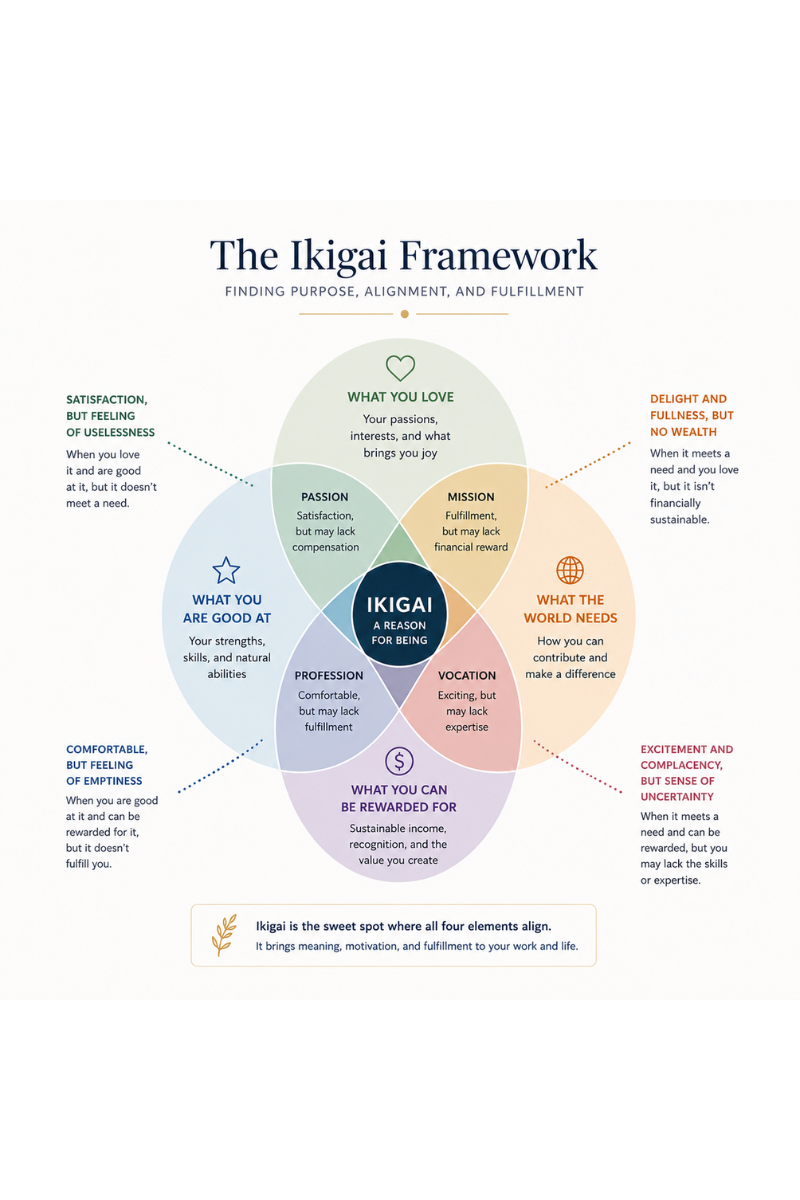
The Ikigai Framework illustrates how purpose emerges at the intersection of what you love, what you're good at, what the world needs, and what you can be rewarded for.
When leaders understand their purpose, they often lead with greater intention. They make decisions more confidently. They communicate more authentically. They remain connected to what matters most, even during periods of uncertainty or change.
But purpose alone is not enough. I've worked with many leaders who have a strong sense of purpose and still struggle with difficult conversations, decision-making, communication challenges, burnout, conflict, or team dynamics.
Purpose tells us where we want to go.
It doesn't necessarily determine how we get there.
The Missing Piece: Energy
This is where the Energy Leadership Index (ELI) offers another valuable perspective.
The ELI framework helps us understand that our thoughts, emotions, perceptions, and behaviors are influenced by different energetic states. These energetic states shape how we interpret situations, respond to challenges, communicate with others, and ultimately lead.
Imagine two leaders facing the exact same situation. Both care deeply about their employees. Both want the best outcome. Both believe in the organization's mission.
One becomes overwhelmed by the emotional weight of the decision and delays taking action. The other approaches the situation with clarity, accountability, and a focus on what will best serve the organization over the long term.
Neither leader necessarily cares more than the other. Neither leader is more committed to the mission. The difference may simply be the energy from which they are leading.
Why Purpose and Energy Must Work Together
One of the reasons I find the combination of Ikigai and ELI so compelling is that it helps explain a pattern I see repeatedly in coaching. Many leaders have no shortage of commitment. They care deeply, they work hard and they genuinely want to help others succeed.
Yet many of these same leaders find themselves exhausted, frustrated, overwhelmed, or stuck. Why?
Because purpose without awareness can create unintended consequences. A leader driven by service may struggle to establish boundaries. A leader who wants everyone to succeed may avoid difficult conversations.
A visionary leader may see possibilities that others cannot yet see but struggle to communicate those ideas in a way that creates buy-in. A passionate leader may unintentionally create pressure for others to match their level of commitment.
In each of these situations, the challenge is not purpose. The challenge is understanding how energy influences leadership behavior.
The Ikigai Leadership Lens
When viewed together, Ikigai and the Energy Leadership Index create a powerful lens for understanding leadership. Ikigai helps leaders clarify why they lead. The Energy Leadership Index helps leaders understand how they lead.
One provides direction. The other provides awareness. Together, they help leaders move beyond good intentions and toward sustainable impact.
Throughout this series, we'll explore how different energetic states influence leadership through the lens of Ikigai.
We'll examine:
What happens when service and compassion drive leadership.
How leaders balance care with accountability.
Why some leaders naturally see possibilities others miss.
How passion can inspire, energize, and sometimes overwhelm.
Most importantly, we'll explore how greater self-awareness can help leaders align purpose, energy, and impact in a way that benefits both people and performance.
What I See in Coaching
One of the most common patterns I see in coaching is leaders questioning themselves because they care deeply about the people they lead.
They assume the answer is to care more, to work harder, to sacrifice more of themselves and to give just a little bit more but that's rarely the issue.
More often, the breakthrough comes through awareness. When leaders begin to understand the energy they bring to their purpose, they gain new choices.
They become more intentional about how they communicate, more thoughtful about how they make decisions, more effective in how they navigate conflict and more aware of how they influence the people around them.
Purpose remains important, in fact, it's essential but sustainable leadership requires more than knowing where you're going. It requires understanding how you're showing up along the way.
Leadership Reflection
Think about a leadership challenge you're facing right now. Is the challenge primarily about purpose? Or could it be influenced by the energy from which you're approaching it?
Sometimes the most powerful shift isn't changing the destination. It's changing how you travel toward it.
Frequently Asked Questions About Ikigai Leadership
What is Ikigai Leadership?
Ikigai Leadership is an approach to leadership development that combines the Japanese concept of Ikigai, meaning "reason for being," with energy awareness and self-leadership. It helps leaders align purpose, values, strengths, and impact.
How does Ikigai apply to leadership?
Ikigai helps leaders identify what gives their work meaning and how their strengths, passions, and contributions can create value for others.
What is the relationship between Ikigai and the Energy Leadership Index?
Ikigai helps leaders understand why they lead, while the Energy Leadership Index helps them understand how they lead through different energetic states and perspectives.
Can Ikigai Leadership improve employee engagement?
Leaders who are aligned with purpose and aware of their impact often communicate more clearly, build stronger relationships, and create environments that encourage engagement and growth.
Can organizations use Ikigai principles?
Yes. Organizations can apply Ikigai principles to align culture, purpose, leadership development, and employee engagement around a shared sense of contribution and meaning.
In the next article, we'll explore Level 4 energy and the leadership opportunities and risks that emerge when service, compassion, and the desire to help others become the primary drivers of leadership.